

Bridgology
Bridgology® is the Swiss specialist in non-destructive structural assessment of infrastructure.
Our metaphor: ‘the concrete radiologist’. Just as a radiologist performs an MRI before surgery, we scan the structure before any intervention.
Bridgology was founded in 2013 by Dr Alexis Kalogeropoulos (PhD EPFL). More than 300 projects delivered by the Bridgology group since 2015.
Three offices
Switzerland
Bridgology SA Switzerland
Grand-Chemin 73
1066 Épalinges
Switzerland
T. +41 79 297 40 54
Sweden
Bridgology AB Sweden
Gustavslundsvägen 143
167 51 Bromma (Stockholm)
Sweden
T. +46 73 747 38 04
Thailand
Bridgology Co. Ltd Thailand
988/237 Soi Cha-am 53
Petchkasem Road,
Cha-am, Phetchaburi 76120
Thailand
Two brands
Bridgology
Infrastructure assessment (bridges, tunnels, car parks, civil engineering structures…).
Housedoctors
Building assessment: villas, hotels, residential condominiums. Moisture-related pathologies, cracks, structural defects and hidden structures, with a speciality in swimming pools and car parks.
The team
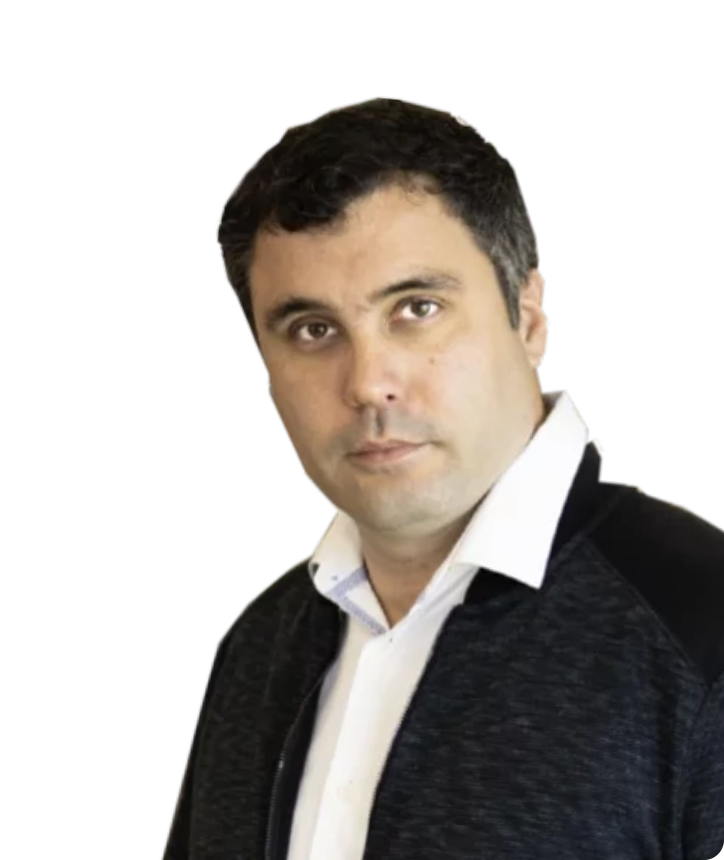


Dr Alexis Kalogeropoulos
CEO, PhD EPFL
Dr Alexis Kalogeropoulos is the founder and CEO of Bridgology. His vision is to keep bridges in the best possible condition at a proportionate cost through condition-based maintenance informed by their actual condition. He is a specialist in ground-penetrating radar applied to civil engineering. In 2005, Karakas & Français SA developed the first GPR applications for tunnel inspection, utility detection and thickness calculation, but further development was needed. This led to a collaboration of more than seven years with Dr Johannes Hugenschmidt (HSR). It first resulted in an article on the inspection of retaining walls using GPR, then in an SNSF research grant for a doctorate on determining chloride and moisture content in concrete using GPR. He obtained his PhD in 2012 under the joint supervision of Dr Johannes Hugenschmidt (then at Empa), Prof. Eugen Brühwiler (EPFL) and Prof. Jan van der Kruk (ETH Zurich, then FZJ). Alongside Bridgology, he contributes to the scientific community as a reviewer for journals such as NDT&E International and Near Surface Geophysics. He also teaches regularly at EPFL: an introduction to GPR for master's students and digital signal processing at the doctoral school.
Publications
- Non-Destructive Determination of Chloride and Water Content in Concrete Using Ground Penetrating Radar, TH5354 EPFL 2012
- Full-waveform GPR inversion to assess chloride gradients in concrete, NDT & E International. 57. 74–84. 10.1016.2013.
Chlorides and moisture assessment in concrete by GPR full waveform inversion, Near Surface Geophysics., 2011, 9, 3, 277-285, EAGE - Processing strategies for high-resolution GPR concrete inspections, NDT&E Int., 2010, 43, 4, 334-342, Elsevier
- The inspection of retaining walls using GPR, Journal of Applied Geophysics, 2009, 67, 4, 335-344, Elsevier
- Pilotstudie zur Evaluation einer mobilen Grossversuchsanlage für beschleunigte Verkehrslastsimulation auf Strassenbeläge, ASTRA 2004/018, Report Nr 1261, (2009)
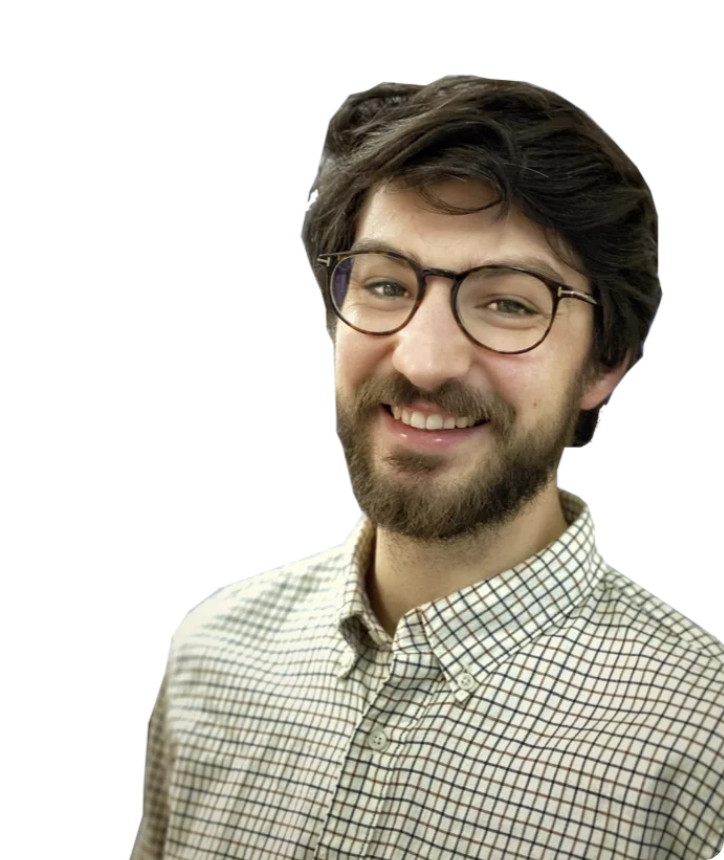
Marisa Khasuwan
Co-founder & COO
I'm Marisa, COO at Bridgology. My role is to make sure our partners have the support, materials and structure they need to work effectively with us and grow in their markets. With a business background from Bangkok and experience working across cultures in Switzerland, I bring a practical understanding of communication, collaboration and building strong relationships across borders.
I work closely with our partners throughout the relationship – from onboarding and technical or marketing materials to project coordination and market development. My priority is to make sure they have direct access to the right information, resources and support when they need it. For me, a strong partnership is about growing together – creating local opportunities, sharing knowledge and building long-term collaboration while maintaining the quality and precision that define Bridgology.
Dr Christophe Loraux
CTO, Structural Engineer
Dr Christophe Loraux joined Bridgology in 2020 as a GPR data analyst and quickly became involved in developing Bridgology's in-house analysis software. With his solid background in civil engineering, he brought his own perspective and improved communication with Bridgology's clients. Within a few months, he had become skilled at uncovering the most complex and hidden features of existing concrete structures! During his Bachelor's and Master's studies at EPFL (École Polytechnique Fédérale de Lausanne), Christophe fell in love with the vast field of existing structures. It was almost natural for him to go on to a PhD thesis on novel materials for strengthening concrete bridge decks and on the long-term monitoring of structures. Christophe is currently a consulting structural engineer at Bridgology's Stockholm office. As remote working is one of the strengths of Bridgology's corporate culture, he works in close cooperation with the head office in Switzerland to solve clients' problems, not only in Sweden but anywhere in the world.
Publications
- Long-term monitoring of existing wind turbine towers and fatigue performance of UHPFRC under compressive stresses, EPFL TH8404 – 2017.
- The use of long term monitoring data for the extension of the service duration of existing wind turbine support structures, Christophe Loraux, Eugen Brühwiler, Journal of Physics conference series 2016.
- A realistic examination of the fatigue life of a wind turbine tower using data from long term monitoring, Christophe Loraux, Eugen Brühwiler, IABSE 2015.
8
Types of
infrastructure
12+
Countries and
territories
300+
Group projects
since 2015
5
Days, car park
of 10,000 m²
Case studies – ground-penetrating radar
applied to real structures
Projects carried out for asset managers, insurers and public authorities.
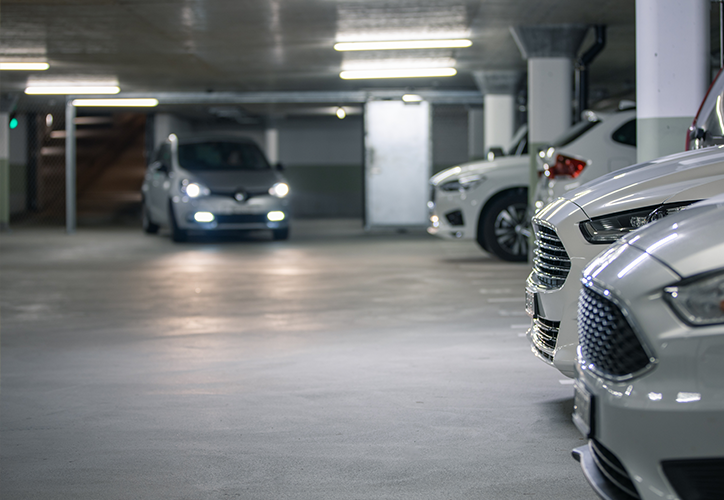
10,000 m² assessed in 5 days
Underground car park in French-speaking Switzerland
329 GPR profiles over 10,000 m² of foundation slab, surveyed without closing the car park or breaking up the floor.
Challenge
Planning maintenance of the foundation slab without knowing the true condition of the concrete. Intervention: high-resolution GPR survey of 100% of the accessible surface, BDGpY™ processing and georeferenced output.
Result
Mapping of reinforcement, voids and defects, Relative Anomaly Index and 3 costed scenarios to prioritise the areas to be treated.
Verifying a critical structure
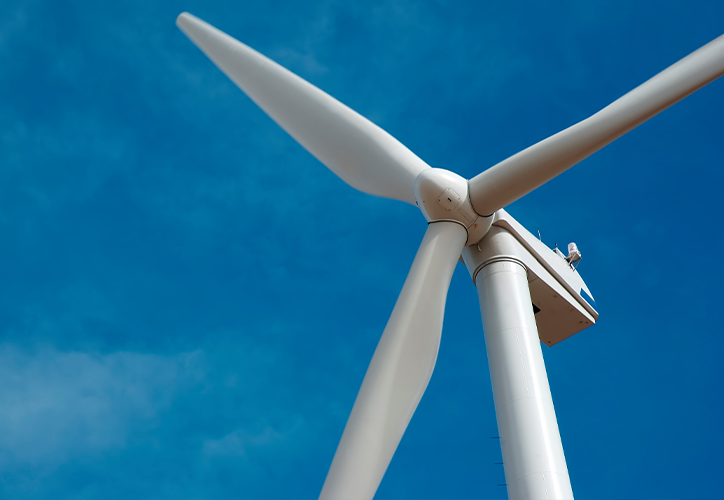
Wind turbine foundation, South-East Asia
Non-destructive assessment of a wind turbine foundation subject to intense cyclic loading.
Project
Subject to client confidentiality: anonymised presentation (no name or precise location).
Challenge
Detecting internal cracking, voids and reinforcement corrosion before they become visible. Demonstrates Bridgology's capability in the energy sector and internationally.
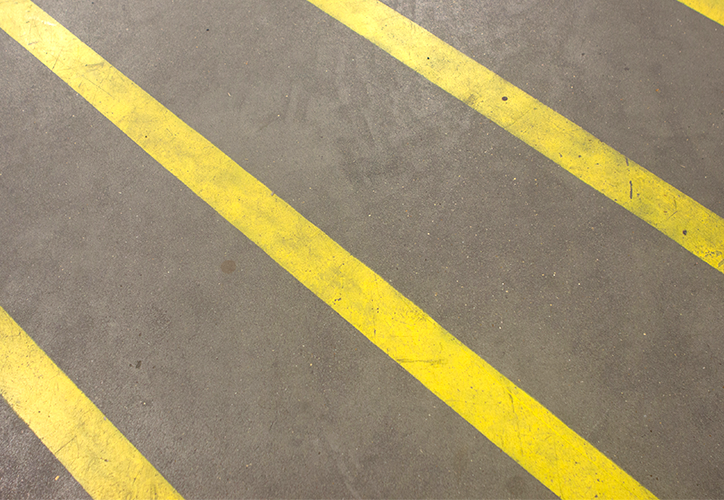
GPR inspection of the foundation slab at a production site to locate voids beneath the slab.
Industrial foundation slab in Sweden – locating voids beneath the slab
Context
Significant voids were located, mainly along the conveyor and around the rolling mill. The study also illustrates the honesty of the method: conductive areas (metal shavings in the concrete) where detection is impossible are explicitly flagged.